 京
京Kyoto Travel Guide: What to See and How to Plan (2026)
For a thousand years Kyoto was Japan's capital, and it still feels like the country's cultural heart: more than 1,600 temples, geisha districts, imperial gardens, and a food culture all its own. It's also one of Japan's busiest destinations, so a good Kyoto trip is as much about timing as it is about the sights.
Start with the Kyoto map. There is no printable PDF yet — the interactive map is the 2026 stand-in for the old lobby print.
The sights worth your time
You can't do all of Kyoto in a few days — and trying to is the classic mistake. Pick a handful and go early.
- Fushimi Inari Taisha — the mountainside tunnel of vermilion torii gates. Free, open 24 hours, and magical at dawn before the crowds.
- Arashiyama — the bamboo grove, riverside, and monkey park on the western edge; pair it with a temple or two.
- Kinkaku-ji — the Golden Pavilion, mirror-still on its pond.
- Kiyomizu-dera — a vast wooden temple stage over the hillside, with old lanes (Sannenzaka) leading up to it.
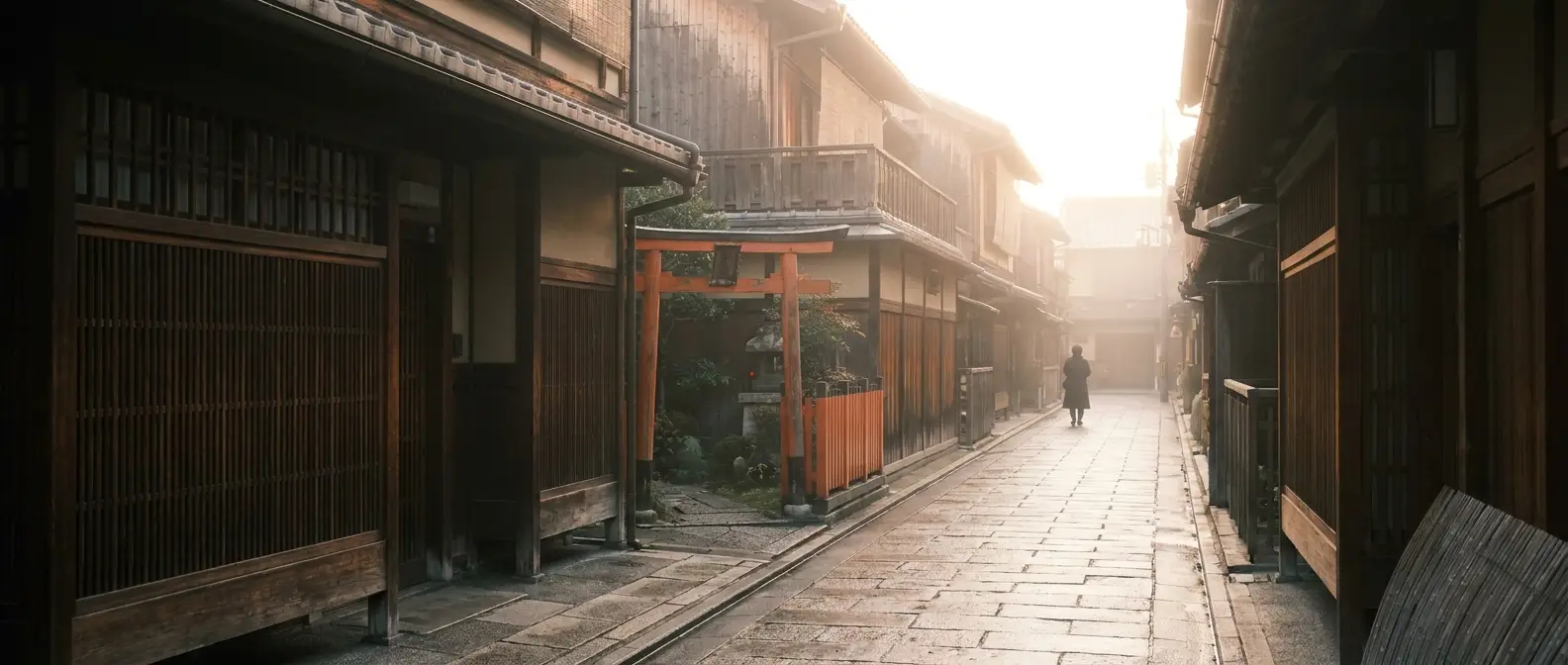
- Gion & Higashiyama — the historic streets where, with luck and good manners, you may glimpse a geiko or maiko at dusk. The Gion map is the district pin from this guide.
Kyoto rewards early starts. Fushimi Inari and Arashiyama are transformed before 8am — quiet, cool, and far more photogenic than at midday.
Beating the crowds
Kyoto has become a flashpoint for Japan's overtourism debate, and the city is actively managing flows — extra signage, etiquette rules in Gion's private lanes, and busy-site management. Travel smart:
- Go to the headline sights at opening or late afternoon.
- Use the quieter northern temples (the Philosopher's Path, Daitoku-ji) when the centre is packed.
- Avoid the cherry-blossom and autumn-leaf peaks if you can; if you can't, book everything well ahead.
Getting there and around
Kyoto is about 2 hours 15 minutes from Tokyo by shinkansen, and barely 15 minutes from Osaka. In the city, buses and two subway lines cover most needs, and many districts are best on foot. Tap in with an IC card rather than buying paper tickets.
- Work out whether the bullet train warrants a pass with our JR Pass guide.
- Set up tap-and-go travel with our IC card guide.
A sensible first-timer's split
Three days is enough for a satisfying first visit: one day for southern Higashiyama (Fushimi Inari, Kiyomizu-dera, Gion), one for Arashiyama and the west, and one for the north or a half-day trip to nearby Nara. See our Nara guide for that add-on.
FAQ
How many days do I need in Kyoto? Two to three days for the highlights; longer if you want temples beyond the famous few or day trips to Nara and Osaka.
Is Kyoto expensive in 2026? Mid-range travel is reasonable, helped by the weak yen, but factor in the new accommodation tax and book peak-season stays early.
What's the etiquette in Gion? Stick to public streets, don't photograph maiko without permission, and keep out of the marked private lanes — fines apply.
Related: Kyoto map · Gion map · Nara day trip · Kawaramachi district · Japan's tourist taxes explained