 奈
奈Nara Travel Guide: The Great Buddha, Deer Park, and a Day Trip Plan (2026)
Before Kyoto, before Tokyo, there was Nara. For most of the 8th century this was Japan's first permanent capital, and that brief golden age left behind some of the country's oldest and grandest monuments — including a bronze Buddha so large the hall built to house it is one of the biggest wooden buildings on earth. The best part for travellers: nearly everything sits inside one walkable park, which makes Nara the easiest great day trip in the Kansai region.
Start with the Nara map. There is no printable PDF yet — the interactive map is the 2026 stand-in for the old lobby print.
The sights worth your time
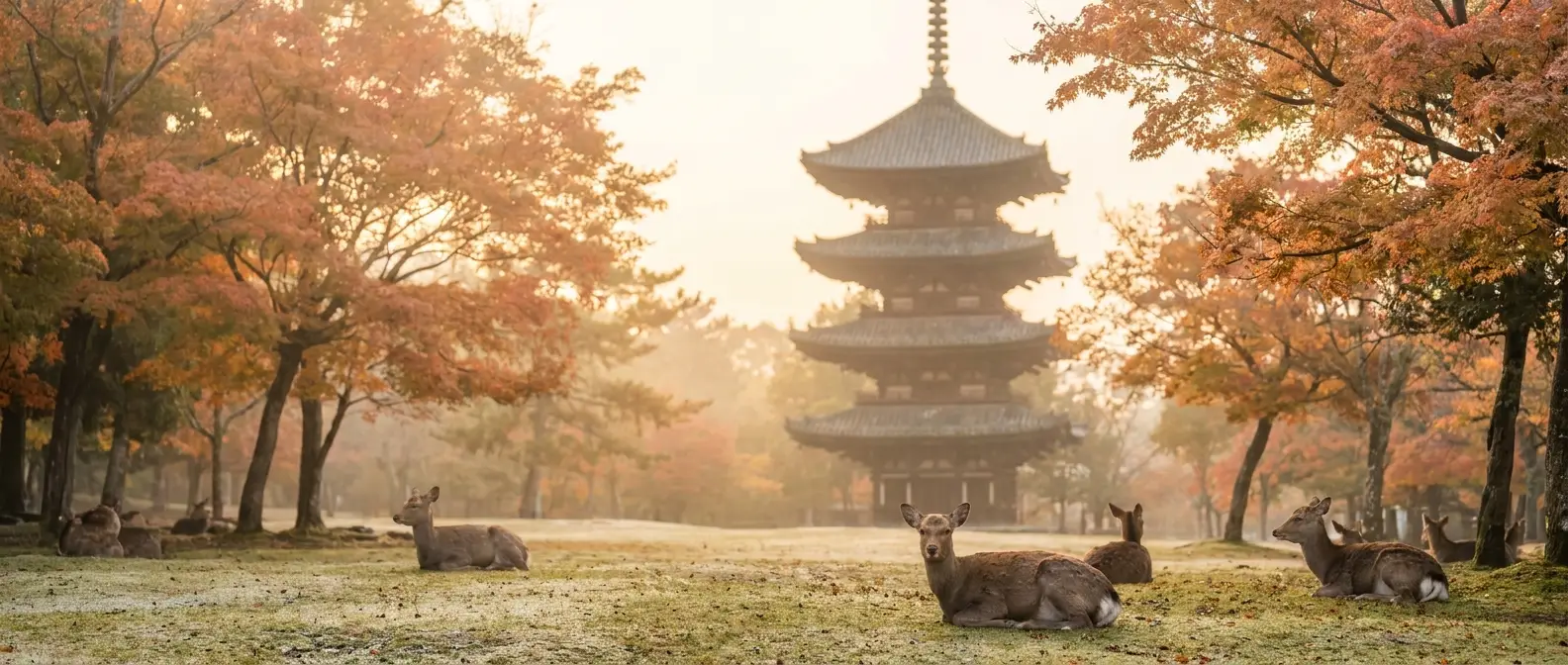
Nara Park is the centre of it all — a sprawling green expanse where the temples, the shrine, and the deer share the same grounds. You can see the headline sights on foot in a few hours.
- Todai-ji and the Great Buddha — the Daibutsu is a 15-metre seated bronze Buddha, cast in the 8th century and still astonishing up close. The hall around it, the Daibutsuden, is worth the visit on its own.
- Nara Park's deer — more than a thousand wild sika deer roam freely and have learned to bow for shika senbei (deer crackers sold by vendors). They are wild animals, not pets; feed politely and watch your bags.
- Kasuga Taisha — a vermilion Shinto shrine at the foot of the forest, famous for the thousands of stone and bronze lanterns lining its paths.
- Kofuku-ji — its five-storey pagoda is one of the tallest in Japan and an easy first stop from the station.
- Isuien Garden — a quiet, beautifully composed strolling garden if you want a calm break from the crowds.
The deer congregate where the crackers are sold; walk a few minutes into the wider park or up toward Kasuga Taisha and you'll find calmer, prettier corners with far fewer people.
Why Nara works as a day trip
Nara is close to both Kyoto and Osaka, and the sights are clustered tightly enough that you don't need to stay overnight to see them well. Half a day covers Todai-ji, the deer, and Kofuku-ji; a full day lets you add Kasuga Taisha, a garden, and a relaxed lunch.
Because most visitors arrive mid-morning and leave by late afternoon, going early — or lingering into the golden evening light after the tour groups thin out — gives you the park at its best.
Getting there and around
From Kyoto it's roughly 45 minutes by train; from Osaka about 35–45 minutes, depending on the line. Two main rail operators serve the city, with stations a short walk (or quick bus ride) from the park. Once you arrive, Nara is a walking destination — the route from the stations through Kofuku-ji to Todai-ji and on to Kasuga Taisha is a pleasant stroll.
- Tap in and out with a prepaid card — see our IC card guide.
- Planning the wider region? Start with our guide to Japan's trains.
Pairing Nara with the rest of Kansai
Nara slots naturally into a Kyoto-based itinerary — see our Kyoto guide for the temples and districts there, and treat Nara as the day-trip add-on. If you're based in Osaka instead, it's just as quick to reach. Either way, you can fold in a stop without losing a full day.
FAQ
How long do I need in Nara? A half day covers Todai-ji and the deer; a full day lets you add Kasuga Taisha, a garden, and lunch at a relaxed pace.
Is it safe to feed the deer? Yes, with common sense. They are wild and can be pushy around food — feed the crackers calmly, keep small items and paper (like maps and tickets) tucked away, and supervise young children.
Should I visit Nara from Kyoto or Osaka? Either works well — both are around 35–45 minutes away. Pick whichever city you're already based in.
Related: Nara map · Kyoto travel guide · Osaka's Namba district · Getting around by train