 河
河Kawaramachi Guide: Kyoto's Downtown, Pontocho & Nishiki (2026)
If Kyoto's temples are its soul, Kawaramachi is its living room. This is downtown Kyoto — covered shopping arcades, a famous food market, lantern-lit dining alleys, and the river running along its eastern edge. It's where the city shops, eats, and goes out, and it makes the most convenient base for a temple-hopping trip.
The shopping arcades
Two parallel covered streets form the spine of the district:
- Teramachi — a long, partly covered arcade mixing old specialist shops (tea, stationery, traditional crafts) with modern stores. It's the place to browse for washi paper and other Kyoto crafts; see our washi guide.
- Shinkyogoku — running alongside, livelier and more youthful, packed with souvenirs, snacks, fashion, and game arcades.
Both are roofed, which makes them a reliable plan in rain or summer heat.
Nishiki Market
A short walk away is Nishiki Market, a narrow covered lane often called "Kyoto's Kitchen." For centuries it has sold the ingredients of the city's cuisine — pickles, tofu, fresh seafood, sweets, knives, and tea — and today it's also a street-food destination. Go early to beat the crowds.
Nishiki Market asks that you eat at the stall where you buy, rather than walking and snacking. Buy, pause, eat, then move on — it keeps the narrow lane flowing and is the polite way to enjoy it.
Pontocho and riverside dining
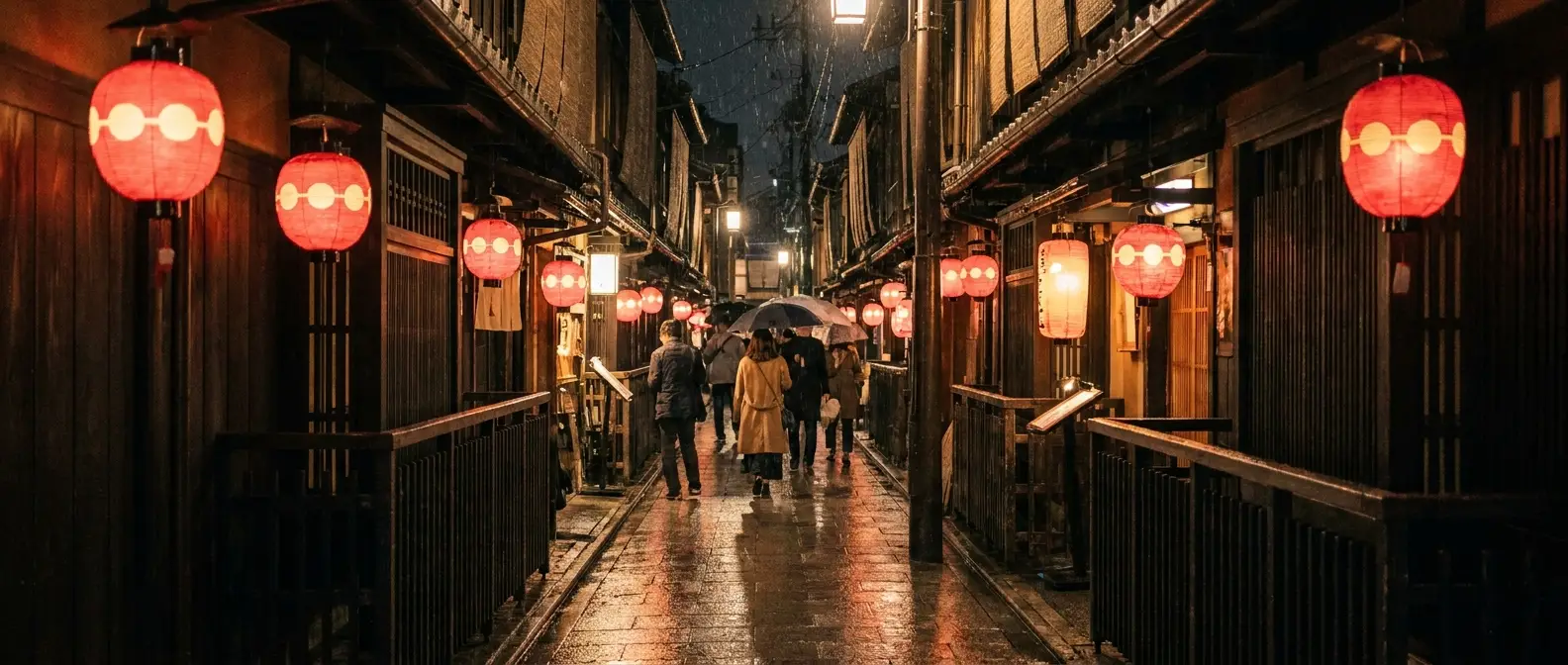
Pontocho is one of Kyoto's most atmospheric streets — a slender, lantern-lit alley running parallel to the Kamo River, lined with restaurants from tucked-away kaiseki to casual izakaya. In the warmer months, many restaurants along the river open raised wooden terraces (kawayuka / yuka) out over the water, a beloved Kyoto summer tradition.
The Kamo River itself is the city's favourite gathering spot. Locals sit along its grassy banks on summer evenings, and the riverside walk is a lovely way to cross town on foot.
Why stay here
Kawaramachi is central in every sense. The Kawaramachi and Gion-Shijo stations put you on subway and private rail lines; buses fan out to the temples; and the historic streets of Gion and Higashiyama are within walking distance to the east. After a long day at the sights, you return to a neighbourhood that's awake and full of places to eat. For the full picture of the city's temples and how to time them, see our Kyoto guide.
A simple plan
Use Kawaramachi as your base. Spend mornings out at the temples, then come back for an afternoon in the arcades and an early pass through Nishiki Market. In the evening, wander Pontocho, eat well, and finish with a walk along the Kamo River. It's the easiest way to enjoy both Kyoto's history and its everyday life.
FAQ
Is Kawaramachi a good area to stay in Kyoto? Yes — it's central, walkable, well-connected to the temples, and full of food and shopping. Many visitors find it the most convenient base.
What's the difference between Teramachi and Shinkyogoku? They run side by side: Teramachi is the older, more traditional arcade; Shinkyogoku is younger and more souvenir-focused. Both are covered.
When can I dine on the riverside terraces? The yuka terraces over the Kamo River are a warm-season tradition, roughly through the spring-to-autumn months. [VERIFY: current yuka season dates]
Related: Kyoto · Washi paper · Tourist taxes