 神
神Kobe Travel Guide: Beef, the Kitano Quarter, and Mount Rokko (2026)
Hemmed between the mountains and the sea, Kobe has the relaxed confidence of a port city that has always looked outward. It opened to foreign trade in the 19th century, and that cosmopolitan streak still shows — in its hillside Western mansions, its bakeries and coffee houses, and of course in the beef that carries its name around the world. It's also one of the easiest add-ons to a Kansai trip, a short hop from both Osaka and Kyoto.
Start with the Kobe map. There is no printable PDF yet — the interactive map is the 2026 stand-in for the old lobby print.
The sights worth your time
Kobe is compact and stylish, and you can mix city, mountain, and waterfront in a single day.
- Kobe beef — the famously marbled wagyu is the city's signature. Teppanyaki counters, where a chef grills the beef in front of you, are the classic experience; quality and price vary widely, so it pays to choose carefully.
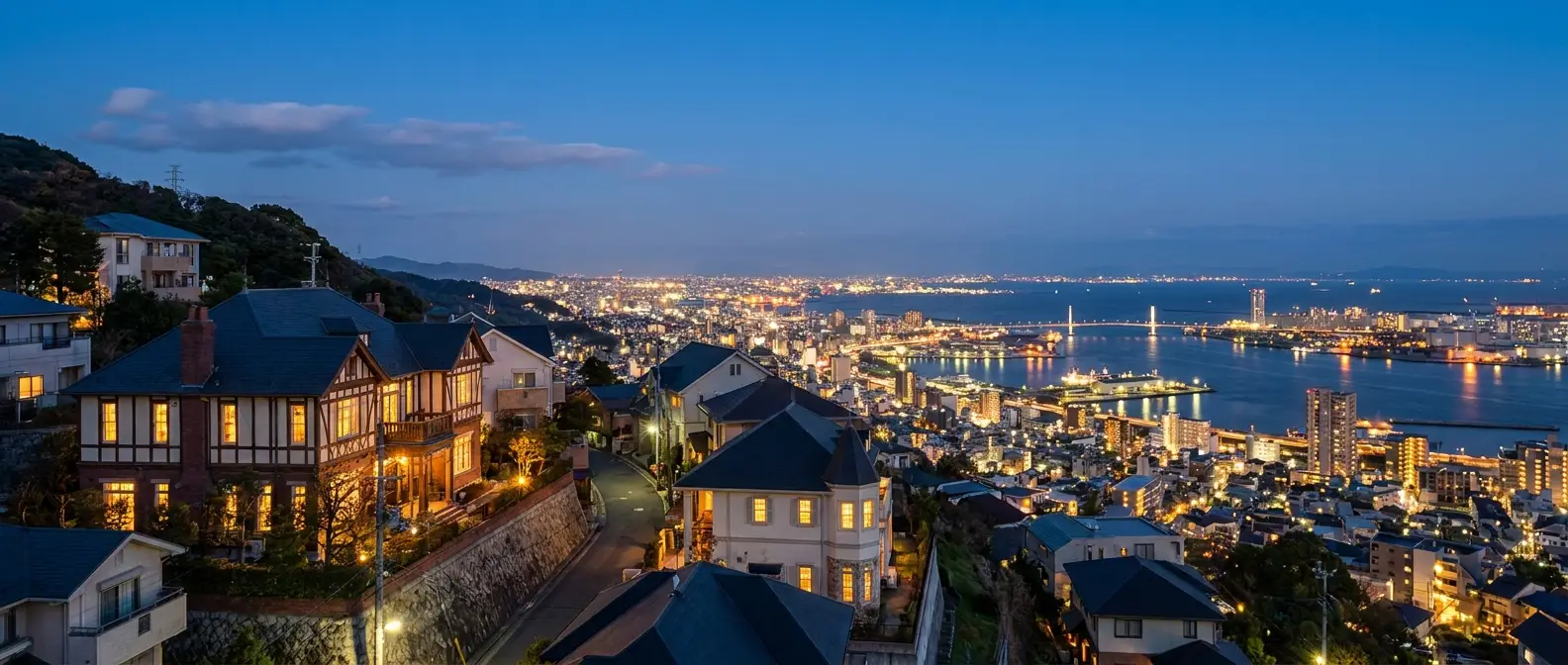
- Kitano — the historic foreign-residence quarter on the slopes north of the centre, lined with preserved Western-style merchant houses (the ijinkan). It's an atmospheric area to wander, with views down over the city.
- Mount Rokko and the Nunobiki Herb Garden — a ropeway climbs from near the city to the herb garden's terraced flowerbeds and viewpoints, with the wider Mount Rokko range beyond. The night view over Kobe from the heights is one of Japan's most celebrated.
- Nada sake breweries — Nada is one of Japan's premier sake-producing districts. Several breweries run museums and tasting rooms where you can learn how the rice wine is made and sample the results.
- Meriken Park and the harbour — the redeveloped waterfront, with Kobe Port Tower and the Maritime Museum, is a pleasant stroll, especially toward sunset.
For the famous night panorama, ride up Mount Rokko or to the herb garden in the late afternoon and stay as the city lights come on — the view is the main event.
Eating well in Kobe
Beyond the beef, Kobe has a deserved reputation for food. The Chinatown of Nankinmachi is packed with street snacks, and decades of foreign influence have given the city a strong baking and sweets culture. Reserving ahead is wise at the better beef restaurants, which fill up — especially in the evenings.
Getting there and around
Kobe is close to the rest of Kansai: roughly 30 minutes from Osaka and about an hour from Kyoto by train, with frequent services. The central districts around Sannomiya are walkable, and a short subway or bus ride connects to Kitano, the harbour, and the foot of the ropeways.
- Use a prepaid card to ride without buying tickets — see our IC card guide.
- Weighing up rail travel across Japan? Read our JR Pass guide.
Combining Kobe with Osaka and Kyoto
Kobe completes the western end of the Kansai triangle. Many travellers base themselves in Osaka's Namba district and visit Kobe for a day, or fold it into a wider loop with Kyoto. Its closeness to both cities means you don't have to commit a whole trip to enjoy it.
FAQ
Do I have to splurge to eat Kobe beef? Not necessarily. Lunch sets are often far cheaper than dinner courses, so a midday teppanyaki meal is a good way to try genuine Kobe beef without the highest prices. Book ahead at popular places.
Is Kobe worth an overnight, or just a day trip? A day trip covers the essentials. An overnight makes sense if you want the Mount Rokko night view, the Nada breweries, and an unhurried dinner.
What is Kitano? It's the hillside quarter where foreign merchants built Western-style homes after the port opened. Several are now open to visit, and the lanes between them are lovely to explore.
Related: Kobe map · Osaka's Namba district · Kyoto travel guide · Is the JR Pass worth it?