 渋
渋Shibuya Travel Guide: The Scramble, Shibuya Sky & Beyond (2026)
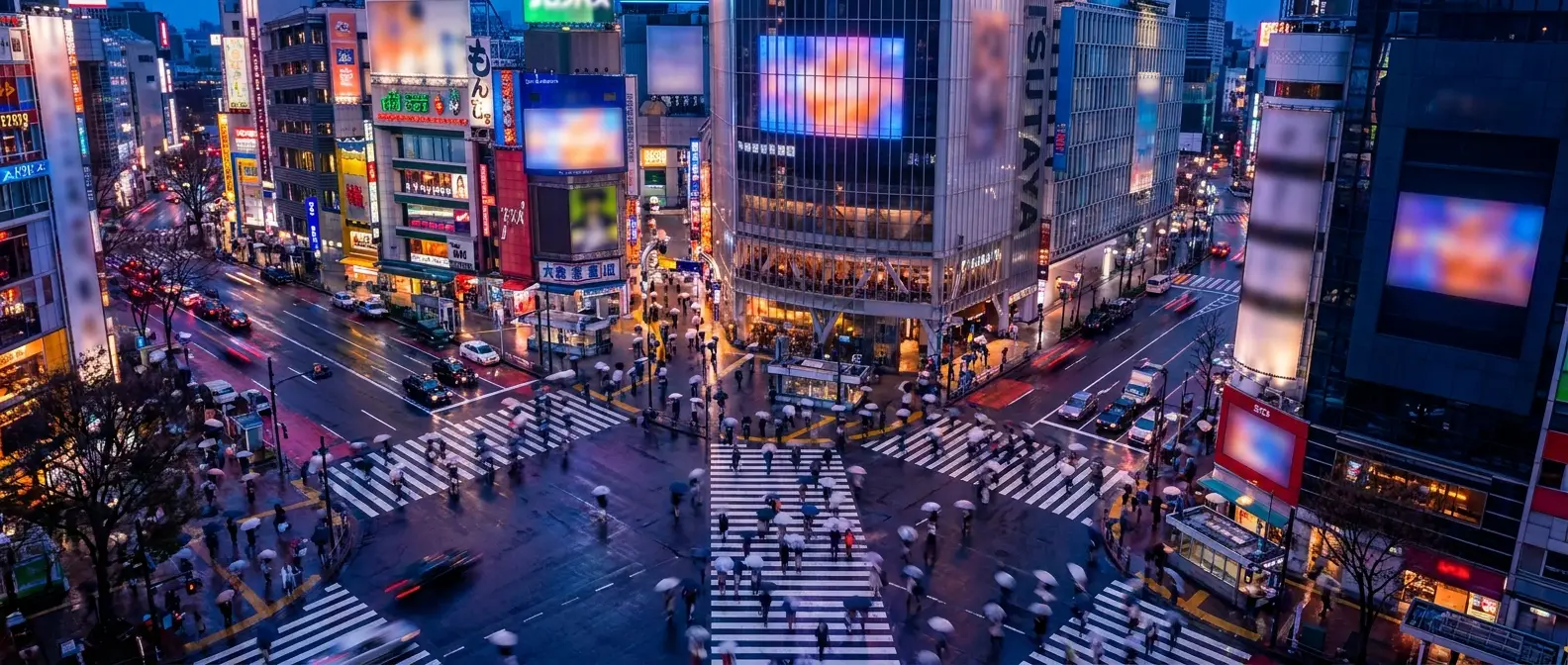
Shibuya is the Tokyo people picture before they arrive: the great diagonal crossing, the glow of screens, crowds pouring in every direction at once. It is loud, young, and constantly rebuilding itself — but it is also walkable, well-connected, and an easy base for a first trip. Spend a day here and you understand the city's tempo. The Shibuya map plots the scramble, Hachiko, and the towers named below; the Tokyo map has the rest of the city.
The Scramble Crossing
The Shibuya Scramble is the famous intersection outside the station's Hachiko exit, where all signals stop traffic and pedestrians flood across from every corner at once. At peak times thousands cross in a single light change. It works best as something to experience, then to watch: cross it once for yourself, then go up for a view.
- From above for free: the windows of the Mag's Park rooftop and the upper floors of nearby department stores look straight down on the action.
- The classic café angle: the second-floor windows of the Starbucks in the Tsutaya building frame the crossing — though seats fill fast.
Hachiko, the loyal dog
Just outside the station stands the bronze statue of Hachiko, the Akita dog who kept returning to meet his owner for years after the man had died. It is Tokyo's best-known meeting point — useful to know, since "let's meet at Hachiko" is a real instruction locals give. Expect a small crowd and a short queue for photos.
Shibuya Sky and the new towers
Shibuya has shot upward in recent years. The standout is Shibuya Sky, the open-air observation deck atop Shibuya Scramble Square, where you stand on a rooftop ringed only by glass with the whole city — and Mt. Fuji on clear days — spread below. Sunset slots are popular and sell out, so book a timed ticket in advance.
For Shibuya Sky, aim for a slot 30–45 minutes before sunset. You catch the city in daylight, the sunset itself, and the lights coming on — three views for one ticket.
Other towers worth a look include Shibuya Hikarie and the Miyashita Park complex, a rooftop park built over shops and food stalls.
Shopping and street culture
Center-gai is the pedestrian street running off the crossing — fast fashion, drugstores, game arcades, and snack stands, busiest in the evenings. Around it you'll find big-name department stores, the music and record shops of Udagawacho, and, a short walk north, the boutiques and crepe stands of Harajuku and Takeshita Street. Shibuya makes the natural gateway to that whole area on foot.
Nightlife
After dark, Shibuya is one of Tokyo's main going-out districts: izakaya in the backstreets, cocktail bars, live-music venues, and clubs that run late. It skews younger and busier than the polished bars of Ginza. Stick to the lit main streets, and remember trains stop around midnight — plan your route or budget for a taxi.
A simple plan
Start at Hachiko, cross the Scramble, browse Center-gai, then walk north into Harajuku for the afternoon. Loop back for a timed Shibuya Sky slot near sunset, and finish with dinner and a drink in the backstreets. If you want a contrast the next day, the otaku-and-parks district of Ikebukuro sits a short Yamanote ride away — see our Ikebukuro guide.
Getting around Tokyo is easiest with a rechargeable travel card; see our IC card guide, and for the wider network our guide to Japan's trains.
FAQ
When is the Scramble Crossing busiest? Friday and Saturday evenings, and around the going-home rush on weekdays. For lighter crowds, come on a weekday morning.
Do I need to book Shibuya Sky in advance? For sunset and weekend slots, yes — timed tickets sell out. Quieter daytime slots are easier to walk up to. [VERIFY: current ticket and booking details]
Is Shibuya a good base for a first Tokyo trip? Yes. It's central, well-served by trains, packed with food and shopping, and within walking distance of Harajuku.
Related: Shibuya map · Tokyo map · Ikebukuro · Japan's trains explained · IC cards